



73% of buyers in the State of Connected Customer Report say that most sales interactions feel transactional. This often happens because sales reps treat every customer as if they’re ready to buy, even though priorities differ at each stage of the journey.
The root cause is usually a poorly structured sales pipeline. Without clear stages, follow-ups become mistimed, processes turn chaotic, and leads are either rushed or ignored.
In this blog, we’ll explain what a sales pipeline is, break down its stages, and show how to build one that enables personalized, high-impact sales conversations.
What is a sales pipeline?
A well-defined sales pipeline typically includes stages like prospecting, lead qualification, proposal, negotiation, and closing. By analyzing the pipeline, sales teams can identify roadblocks, improve conversion rates, and streamline their efforts to maximize deal closures.
What are the stages of a sales pipeline?
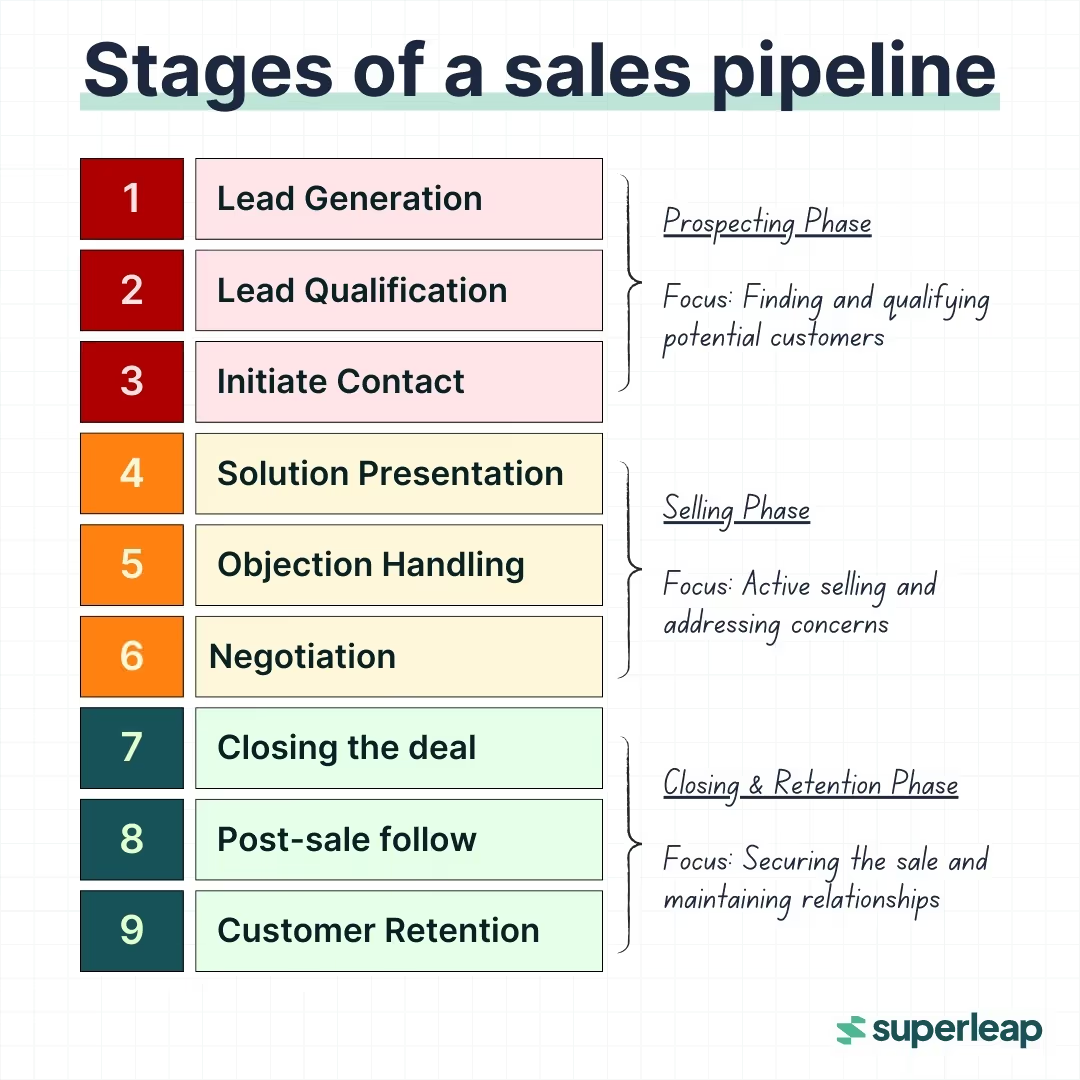
A sales pipeline consists of defined stages that guide sales teams in moving prospects from initial engagement to becoming loyal customers.
Each stage represents a key milestone in the buying journey, ensuring a systematic approach to converting leads into revenue. Here’s an overview of the typical stages:
1. Lead generation
At this stage, potential leads are identified through social media, email campaigns, and website inquiries. The focus is building a pool of prospects interested in your product or service.
Common mistake: Treating all incoming leads as sales-ready
2. Lead qualification
Not all leads are equal. In this stage, leads are evaluated based on their fit with your target audience and their likelihood of purchasing. Tools like CRM systems help score and prioritize leads.
Common mistake: Advancing unqualified leads into demos
3. Initiate contact
This step involves contacting qualified leads via email, phone, or other communication methods to understand their needs and provide value.
Common mistake: Pitching instead of listening
4. Schedule a demo or meeting
Once interest is established, a demo or meeting is scheduled to showcase how your solution addresses the prospect’s pain points.
Common mistake: Using generic demos for all prospects
5. Objection handling
This critical stage involves addressing and resolving customer concerns, doubts, or resistance points that arise during the sales process.
Common mistake: Rushing objections instead of exploring them
6. Negotiation
This stage focuses on handling objections, discussing pricing, and customizing offers to suit the prospect’s requirements, aiming to secure a commitment.
Common mistake: Discounting too early
7. Closing the deal
When negotiations are successful, the deal is finalized. Contracts are signed, and the prospect officially becomes a customer.
Common mistake: Delayed follow-ups during final approval
8. Post-sale follow-up
After closing, staying in touch with the customer ensures satisfaction and opens doors for upselling or cross-selling opportunities.
Common mistake: Handing off without context
9. Customer retention
The final stage emphasizes maintaining strong customer relationships through exceptional support and regular engagement, fostering loyalty and long-term partnerships.
Common mistake: Only reaching out at renewal time
How to build a sales pipeline?
1. Identify buyers and pipeline stages
The first step in creating a sales pipeline is to consolidate potential buyers and categorize them according to their current stage in the buying process.
You should organize opportunities by stage; businesses can maintain a clear overview of their pipeline health and prioritize activities accordingly
2. Define sales activities for each stage
Once the stages are defined, it is essential to assign specific sales activities tailored to each pipeline stage. These activities may include sending targeted emails, tracking key metrics, creating promotional content, conducting demonstrations, and drafting proposals.
Customizing sales processes not only enhances efficiency but also aids in forecasting revenue as prospects progress through the sales cycle.
3. Develop a sales process
Creating a sales process involves mapping out the stages of the pipeline and detailing the actions required at each stage.
The sales process should be aligned with the needs of the target audience and facilitate seamless communication between the sales and marketing teams. Key considerations include lead qualification criteria and the types of messaging that will resonate with prospects at different stages.
4. Utilize sales tools and technologies
Implementing appropriate sales tools and technologies can significantly streamline the sales pipeline. Customer Relationship Management (CRM) software, sales engagement platforms, and analytics tools are vital in managing leads, tracking customer interactions, and providing insights into pipeline performance.
The choice of tools should align with the business's sales strategy and be integrated into the overall sales process.
5. Conduct market research and define ideal customer profiles
To effectively fill the pipeline, businesses must identify their Ideal Customer Profiles (ICPs) and buyer personas. This involves researching demographics, pain points, and purchasing behaviors to tailor marketing and sales efforts to meet specific customer needs.
Sales pipeline metrics you should track
- Conversion rate between stages
- Average deal size
- Sales cycle length
- Pipeline velocity
- Win rate
These metrics reveal where deals stall and where process improvements are needed.
Best practices for managing a sales pipeline
Managing a sales pipeline is crucial for maximizing revenue potential and ensuring the success of sales teams. By implementing a series of best practices, organizations can streamline their sales processes and enhance overall performance.
Regularly review and update your pipeline
Conducting regular reviews of the sales pipeline is essential for identifying bottlenecks, addressing stagnant deals, and verifying data accuracy. These reviews serve as an opportunity to analyze deal statuses and fine-tune strategies for more accurate revenue forecasting.
Define clear pipeline stages and criteria
Establishing specific, measurable criteria for each pipeline stage that aligns with the buyer's journey is vital. It must be documented and clearly communicated to the sales team. Regular training ensures all team members understand and adhere to these definitions, promoting clarity and accountability.
Automate the sales playbook
Automation is a cornerstone of efficient sales pipeline management. Automated reminders, task assignments, and follow-ups ensure timely engagement and consistent execution across the team.
Focus on relevant metrics for tracking
A data-driven approach to tracking relevant sales metrics is essential for optimizing the pipeline. Metrics such as conversion rates, average deal size, and pipeline velocity can reveal inefficiencies and help sales teams make strategic decisions.
Clean your pipeline regularly
To maintain a focused and productive sales pipeline, it is important to regularly remove outdated or unqualified leads. This cleaning process involves dropping leads that are unlikely to convert, allowing sales teams to improve forecasting accuracy and rep productivity.
Stay on top of follow-ups
Missed follow-ups are one of the most common reasons deals are lost. Setting automated reminders within CRM tools can help ensure that no lead is overlooked, facilitating continuous engagement with potential customers.
Prioritize lead nurturing
Nurturing leads throughout the sales process is crucial for maximizing conversions. This involves leveraging personalized communications to engage with prospects and providing valuable information that can guide them toward a purchase decision.
Common challenges in sales pipeline management
Managing a sales pipeline is essential for driving revenue and closing deals; however, sales teams often face many challenges that hinder their effectiveness.
Disorganized data
One of the most prevalent issues in sales pipeline management is disorganized data. Sales teams frequently struggle with scattered information across different platforms, leading to confusion and inefficiencies in tracking leads and opportunities. This disorganization can result in missed follow-ups and lost leads, ultimately affecting sales performance negatively.
Poor lead quality
Another significant challenge is maintaining lead quality. As leads progress through the pipeline, it is crucial to ensure they remain aligned with the organization’s target market. Poor lead quality not only wastes resources but can also lead to decreased morale among sales representatives, who may become frustrated with unproductive efforts.
Organizations must establish clear criteria for lead qualification and continuously review their lead generation strategies to attract high-quality prospects.
Lack of alignment between sales and marketing
Misalignment between sales and marketing teams can further complicate pipeline management. When goals, criteria, or communication are not synchronized, it can lead to inefficiencies and missed opportunities.
To counter this challenge, organizations should foster collaboration through shared objectives and regular team communication, ensuring a cohesive approach to lead management.
Manual processes
Many sales teams still rely on manual processes for managing their pipelines, which can be both time-consuming and prone to errors. Without automation, the qualification process can slow down significantly, resulting in delays in responding to potential customers.
Implementing marketing automation tools and customer relationship management (CRM), systems can streamline these processes, reducing the burden on sales staff and improving overall efficiency.
Tracking offline interactions
In an increasingly digital world, businesses face difficulties tracking offline interactions contributing to lead generation, such as in-person events and phone calls. The inability to accurately measure the success of these offline engagements can create a lack of clarity in lead management strategies, making it challenging to optimize efforts.
To address this, companies can adopt unique identifiers and use call-tracking software to gain insights into offline interactions.
How modern sales teams manage pipelines effectively
High-performing sales teams use CRM-driven pipelines to track every interaction, automate routine tasks, and align sales actions with buyer intent. This reduces manual work, improves visibility, and enables more meaningful customer conversations.
Start working on your sales pipeline
An optimized sales pipeline is more than a tool - it’s the backbone of a successful sales strategy. You must understand its stages and tailor your approach to meet prospects where they are.
That’s how you can move beyond transactional selling to create meaningful, results-driven interactions.
Are you ready to take the next step? Start optimizing your sales pipeline today.





%201%20(1).svg)
.svg)
.svg)
.svg)
.svg)