


According to a 2024 report by the Promotion Optimization Institute, many companies struggle to achieve a positive return on investment (ROI) from their sales promotions due to challenges in aligning strategies with consumer behavior and market dynamics.
The reason isn’t discounts - it’s poor alignment with buyer intent, timing, and execution. This guide breaks down how to design sales promotions that actually convert and drive revenue.
What is a Sales Promotion?
The goal of these strategies is to drive immediate action, such as purchases or increased engagement, and typically involve time-limited incentives like discounts, free samples, or bundled offers.
Key features of sales promotions
- Time-Bound: Sales promotions are inherently short-term and designed to create urgency.
- Incentive-Driven: They offer tangible benefits like price reductions, freebies, or loyalty points to motivate action.
- Targeted: Promotions can be tailored to specific customer segments, such as first-time buyers or high-value customers.
- Measurable Impact: The success of a sales promotion can be quickly gauged through metrics like sales volume, website traffic, or redemption rates.
- Complementary Role: They often work alongside other marketing strategies, enhancing the effectiveness of advertising and sales efforts
Difference Between Advertising and Sales Promotion
Advertising refers to strategic communication efforts to build brand awareness, create a favorable public image, and foster long-term customer loyalty. You use various media channels like TV, digital platforms, and print to convey messages to a broad audience.
On the contrary, sales promotion is a tactical tool for achieving specific sales or market objectives within a set timeframe.
Here’s a table to explain the difference between advertising and sales promotion:
Key Goals of Sales Promotion
- Boosting short-term sales: Promotions like flash sales or exclusive discounts can help clear inventory or hit sales targets within tight deadlines.
- Engaging customers: By offering value-added benefits, sales promotions encourage customer interaction and loyalty.
- Supporting product launches: Introductory offers and trial discounts generate buzz and encourage customers to try new products.
- Enhancing market competitiveness: Strategic promotions can help brands stand out in crowded markets and attract customers away from competitors.
- Data collection: Promotions that require sign-ups or coupon codes provide valuable customer data for future marketing efforts.
When Sales Promotions Work - and When They Backfire
When Sales Promotions Work Well
- Clear inventory pressure → promotions accelerate cash flow without hurting brand
- New product launches → promotions reduce trial friction and speed adoption
- Price-sensitive segments → targeted offers unlock incremental demand
- Time-bound buying windows → urgency converts hesitation into action
- Re-engaging dormant customers → promotions restart stalled relationships
- Competitive displacement → tactical promos help steal market share
- Bundled value offers → higher AOV without direct price cuts
- End-of-quarter gaps → controlled promotions help hit revenue targets
- Event-led moments (festivals, launches) → promotions ride existing demand spikes
- Well-defined exit strategy → promotions drive lift without long-term dependency
When Sales Promotions Don't Work
- Over-discounting → brand erosion and long-term pricing damage
- Frequent promotions → customers wait for deals instead of buying
- Untargeted discounts → margin loss without incremental demand
- Promotions without clear goals → short-term spikes, no lasting growth
- Using promotions to fix weak positioning → structural problems get hidden, not solved
- Discounting high-intent buyers → revenue cannibalization
- Poor timing → low urgency and wasted promotional spend
- No post-promo strategy → churn once the offer ends
- Inconsistent promotion logic → customer confusion and trust erosion
- Lack of ROI tracking → repeating unprofitable campaigns
How do the objectives of sales promotions align with the overall business strategy?
Revenue Growth
Sales promotions directly contribute to revenue growth by driving immediate sales and incentivizing bulk purchases. They capitalize on customer urgency and provide tangible reasons to buy now rather than later.
Market Penetration
Sales promotions aid market penetration by appealing to new customer segments or geographic areas. They provide low-risk entry points for potential customers to engage with the brand.
Customer Retention
Sales promotions foster customer retention by rewarding loyalty and ensuring repeat purchases. They create an emotional connection with the brand by offering added value over time.
Product Awareness
Promotions are highly effective in building awareness, especially during new product launches or upgrades. They attract attention and encourage trials by reducing the barrier to entry.
Examples of sales promotions in various industries
- Ed-Tech: Coursera’s free access to its AI specialization courses for a limited time created widespread buzz and drove thousands of new enrollments, establishing the courses as a market leader.
- Real Estate: A real estate developer offering a "zero down payment" promotion for first-time homebuyers in suburban areas can expect an expanded customer base and drive significant new bookings from younger buyers.
- BFSI (Banking, Financial Services, and Insurance): HDFC Bank’s zero processing fee on home loans for first-time borrowers in rural areas helped the bank establish a strong presence in underbanked regions.
- Healthcare: Apollo Hospitals introduced priority membership plans with discounted consultations for regular patients, driving higher retention rates and consistent revenue streams.
- Automotive: Hyundai’s limited-time trade-in bonus for customers upgrading their old vehicles encouraged faster decision-making and boosted quarterly sales revenue significantly.
Types of Sales Promotions
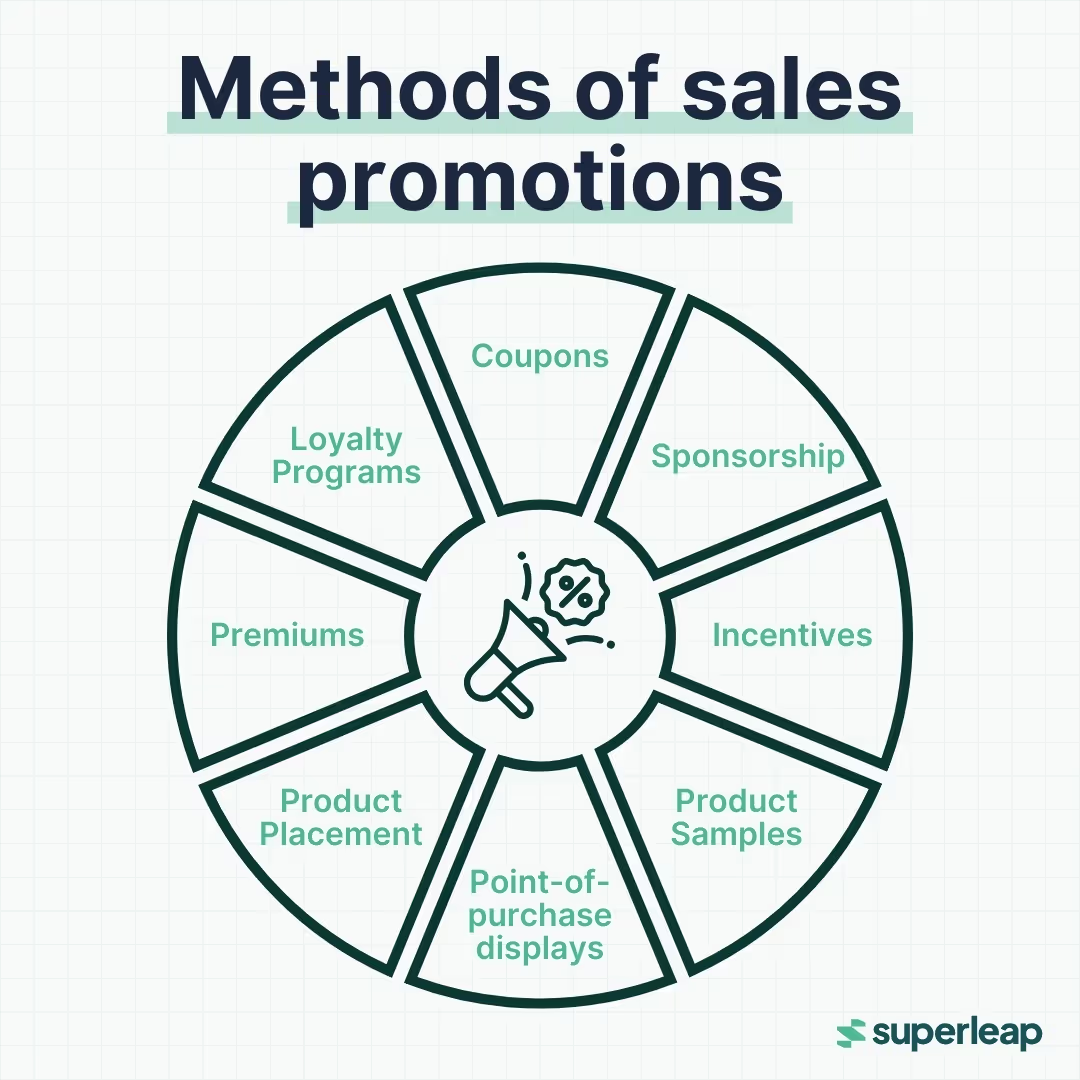
Consumer promotions (e.g., discounts, free samples, coupons)
Through consumer promotions, you incentivize the end customer to purchase directly. In these types of promotions, you include discounts, free samples, and coupons to provide immediate value to your customers so they take action as soon as they come across your promotional offer.
For example, Udemy’s flash sales offering courses for as low as ₹499 create urgency among learners and boost sales significantly within short windows.

Trade promotions (e.g., bulk discounts, partnerships)
Through trade promotions, you target intermediaries such as wholesalers, distributors, or retailers. These promotions may include bulk discounts, special terms, or cooperative marketing efforts, so these intermediaries place larger orders.
For example, property developers offering exclusive bulk purchase discounts to agents during pre-launch events help secure early bookings and build momentum for their projects.

Sales force promotions (e.g., contests, incentives)
Through the sales force promotions, you motivate and reward the sales team to ensure better performance and goal achievement. You can conduct contests; monetary incentives and recognition programs are common strategies.
For example, a bank incentivizing its sales team with performance-based bonuses to achieve higher credit card sales targets led to a noticeable uptick in product adoption and team morale.

Best Practices for Sales Promotion
Planning and timing your promotions
Identify the right periods—such as holidays, seasonal peaks, or product launch events—to ensure maximum visibility and engagement. You can use Google Trends to identify time periods when searches for certain items peak.
Aligning promotions with customer needs and preferences
There are different ways to align your promotions with customer needs. While seasonal offers work in e-commerce, customers in different industries prefer other offers. For example, in real estate, customers often value financial feasibility and long-term benefits. Promotions such as "no EMI for the first six months" or free maintenance for the first year can make property ownership more attractive and address common concerns.
Similarly, in healthcare, you need to understand the emotional aspect of decisions and offer discounted health packages during preventive care months (e.g., diabetes awareness month).
Measuring effectiveness and ROI
Track and analyze the performance of sales promotions l to assess their impact and refine future strategies. You can use metrics like sales uplift, redemption rates, and customer acquisition costs to evaluate ROI effectively.
How to Measure Sales Promotion ROI (The Right Way)
Sales promotion ROI is not about short-term sales spikes - it’s about incremental profit.
Here’s how to measure it correctly:
1. Incremental Revenue (Not Total Sales)
Only count sales above your normal baseline.
Incremental Revenue = Promo Sales − Expected Baseline Sales
If baseline is 1,000 units and promo drives 1,300 → only 300 units are real lift.
2. Margin Impact (Revenue ≠ Profit)
Track what discounts do to margins.
Promotion Profit = (Incremental Revenue × Adjusted Margin) − Promotion Cost
If margins drop faster than volume rises, ROI is negative - even if sales increase.
3. Cannibalization Risk (Pulled-Forward Demand)
Promotions can steal from future sales.
Watch for:
- Post-promo sales dip
- No net gain over 30–60 days
If customers only buy during discounts, the promotion fails.
4. Redemption vs Baseline Conversion
High redemptions don’t mean success.
Compare:
- Conversion without promotion
- Conversion with promotion
- Cost per redeemed offer
Always ask: “Would this customer have bought it anyway?”
5. Customer Quality & LTV
Track what promo buyers do next:
- Repeat purchases
- AOV post-promo
- Churn vs non-promo customers
If promo customers churn faster or buy only on deals, long-term ROI is destroyed.
Promotion ROI Checklist
- Incremental revenue > discount cost?
- Margins protected?
- No post-promo sales drop?
- Customer LTV improved?
- Repeatable without deeper discounts?
Enhance your sales promotions to get maximum ROI
Sales promotions are more than just quick wins - they’re strategic opportunities to align with customer needs and drive lasting results.
By planning carefully, addressing key challenges, and measuring outcomes, you can turn promotions into a reliable growth tool.
Use the insights shared in this blog to create campaigns that resonate, convert, and differentiate your business.


%201%20(1).svg)
.svg)
.svg)
.svg)
.svg)