


Most leads don’t convert right away - but with the right nurturing, they can. This guide breaks down proven frameworks, techniques, and tools to move leads from interest to intent.
What is lead nurturing?
Where does lead nurturing fit in the sales funnel?
Lead nurturing sits in the middle of lead generation (getting information) and decision & conversion (closing a deal) - MOFU. The process is more sequential, carefully timed, and behaviour-driven.
If we talk specifically about the B2B landscape, 96% of the leads don’t convert after they first visit your website. A significant amount of leads are lost because there was no follow up, or due to inconsistent engagement.
Additionally, according to Marketo, organizations that prioritize nurturing generate 50% more sales-ready leads while still spending less than 33% on each lead.
However, lead nurturing is not limited to the middle of the funnel. In practice, nurturing can happen across the entire buying journey. An early-stage lead may need educational content, while a prospect evaluating vendors may need customer stories, product comparisons, security information, or a conversation with sales.
A simple way to look at the journey is:
Lead generation → Capture → Segment → Nurture → Score → Qualify → Sales handoff → Conversion
Overall, lead nurturing builds trust through personalized, consistent engagement.
Who is lead nurturing for?
- B2B SaaS and subscription-based businesses
- Companies with long or multi-touch sales cycles
- High-ticket or enterprise sales teams
- SMBs where sales and marketing share ownership of revenue
- Businesses selling solutions (not impulse products)
Lead nurturing is particularly valuable when the purchase requires research, comparison, internal approval, or multiple conversations before a decision is made.
Frameworks & cadences that work
Depending on how far along the prospect is in his/her buyer journey, there is a lead nurturing sequence to follow:
TOFU → MOFU → BOFU mapping
About 47% of the nurtured leads are also more likely to make a larger purchase, therefore increasing the overall ROI.
This kind of consistent engagement is crucial in building trust where recipients know you’re not just trying to make a sale but are keen on understanding their pain points and offering a tailored solution.
A prospect evaluating an enterprise platform may need weeks or months of education, while someone who has started a product trial may need several relevant interactions within a few days. Buying cycle, intent, product complexity, and previous engagement should determine how frequently a prospect is contacted.
This sequence also illustrates an important principle: the next message should depend on the prospect's behaviour. If the prospect clicks the case study, visits pricing, or starts a trial, the next step should not necessarily be the same as it would be for someone who never opened an email.
What are some effective lead nurturing techniques?
Segmentation & personalization
Segmentation becomes more useful when it changes what the prospect actually receives. Simply creating segments without changing the experience does not create meaningful personalization.
For example, an HR software company could segment prospects by company size and industry. A 50-person startup may care about implementation speed and affordability, while a 5,000-person enterprise may care more about integrations, security, procurement, and change management. Both prospects may be interested in the same product, but they do not necessarily need the same nurture journey.
According to contactinfo, aligning content to the stage of the buyer’s journey can improve conversion rates by 72%.
Multichannel nurturing
Use all communication channels to educate the lead.
Email: Draft personalized emails by mentioning company specific information (achievement, feature update, etc).
According to contentmarketinginstitute, 78% of marketers think email marketing is the most effective lead nurturing channel.
Retargeting ads: keep your brand visible for mid/late-stage prospects.
LinkedIn: ideal for reaching decision-makers and doing 1:1 outreach at scale.
Chat & bot flows: capture intent on website; qualify and book demos.
Phone/SDR outreach: essential for BOFU and high-value accounts - but only after meaningful touches.
A Sproutworth article states that companies that meet leads at 3+ touchpoints see a 15% increase in conversion rates vs a single channel.
The prospect should experience these interactions as one connected journey rather than several teams competing for their attention.
Marketing automation/drip campaigns
Use tools to automate sending timed emails, follow-ups based on trigger events (form fill, click, inactivity), to keep leads engaged without manual intervention. This saves time, increases efficiency, uses much less resources, and reduces cost.
The strongest automation is behaviour-based rather than simply time-based. "Send email three days after email two" is a schedule. "Send pricing guidance when a prospect repeatedly shows pricing-related intent" is a decision.
Automation should therefore answer three questions:
- What happened?
- What does that behaviour indicate?
- What should happen next?
According to Oracle, automating lead nurturing campaigns have seen 14% increase in sales productivity and 12.2% decrease in marketing spends.
Lead scoring/qualification
Lead scoring is especially useful when marketing generates more leads than sales can realistically follow up with. Instead of sending every lead to an SDR, teams can prioritize prospects based on a combination of fit and behaviour.
For example, a prospect may receive points for matching the company's ICP, attending a webinar, visiting a product page, and requesting pricing information. A lead who scores highly because of meaningful buying behaviour can be routed to sales, while a low-intent lead can continue receiving educational content.
According to a study by Gartner, businesses using an AI-powered lead scoring model see a 20% hike in conversion rates.
Content marketing
The content itself should answer the question the buyer is most likely to have at that stage.
TOFU content can help a prospect understand the problem. MOFU content can help them evaluate possible solutions. BOFU content can help them assess your product, compare alternatives, understand implementation, or justify the purchase internally.
According to Sci-tech-today, content aligned to stage boosts conversion rates by 72%.
Re-engagement/drip-back campaigns
Let’s say, someone downloads a whitepaper, you send a thank-you email immediately (to ensure delivery), then 2-3 days later you send a follow-up that addresses a common question (is this solution right for me?). Subsequent emails might share testimonials or how-to guides, spaced a few days apart.
By “dripping” content instead of one blitz, you give prospects time to absorb each piece.
Importantly, you can also retarget those same leads with ads on social media or Google to reinforce the message.
Across all techniques, the goal remains the same: deliver the right message, on the right channel, at the right time - without overwhelming the buyer.
What are the benefits of lead nurturing?
A 99firms study shows, nurtured leads convert 50% more often and make 47% larger purchases.
More qualified leads at a lower cost
As mentioned above, nurturing filters out sales ready leads, therefore, cutting cost per lead. This ensures interested buyers reach the bottom of the funnel with reduced wasted effort.
Larger deal sizes
Lead nurturing exposes leads to more information, fostering trust and confidence increasing their investing tendencies. Once base relationship is built, you can also upsell or cross-sell.
Faster close & shortened sales cycles
Nurtured leads move faster through later stages because their questions, objections, and trust factors have been addressed. This means fewer surprises at closing, and a faster, smoother path to conversion.
Better engagement & higher response rates
Lead nurturing with relevant, personalized & timely content increases open rates, click-through, and replies keeping your brand top of mind, improving the chances of conversion.
Long-term customer relationships & repeat sales
Nurturing builds trust. Even if the lead is not ready to buy at the moment, when need be, they remember your brand. This is excellent for repeat business, upsell, cross-sell because you’ve already developed a relationship.
Higher ROI
All of the above benefits combined tend to yield a higher ROI (when techniques are executed strategically) rather than pushing the product towards a sale.
Tools & tech stack (what you actually need)
Core
CRM: single source of truth (Superleap AI CRM).
MAP (Marketing Automation Platform): nurture orchestration (Marketo, Pardot).
Enablement
Sales Engagement: Outreach, Salesloft for calls and sequences.
Intent/enrichment: 6sense, Bombora, Clearbit.
CDP/data hygiene: Segment, Hightouch.
Analytics
Dashboard & reporting: Looker/Tableau for cross-platform dashboards.
Note: Start with CRM + MAP integrated and add intent/enrichment as your program matures.
Common mistakes and how to avoid them
Advanced nurturing tactics
Behaviour-triggered nurturing
Instead of moving every prospect through the same sequence, trigger different journeys based on actions. For example, a prospect who visits pricing several times may move toward a product-focused sequence, while someone who only reads educational content can remain in an awareness journey.
Multi-stakeholder nurturing
B2B SaaS purchases rarely involve only one person. A champion may care about product functionality, while IT evaluates security and integrations and finance evaluates cost. Account-level nurturing can help each stakeholder receive information relevant to their role while maintaining a consistent account-level narrative.
Intent-based nurturing
A prospect's behaviour can change quickly. Someone who was passively researching a category last month may suddenly start comparing vendors, visiting pricing pages, and consuming product-specific content. Intent signals can be used to increase the relevance or urgency of the nurture path.
AI-assisted next-best action
AI can help identify patterns across large volumes of behavioural data and recommend what a marketer or salesperson should do next. The value is not personalization for its own sake; it is using context to decide which interaction is most useful at a particular moment.
Short templates - practical, copy-ready
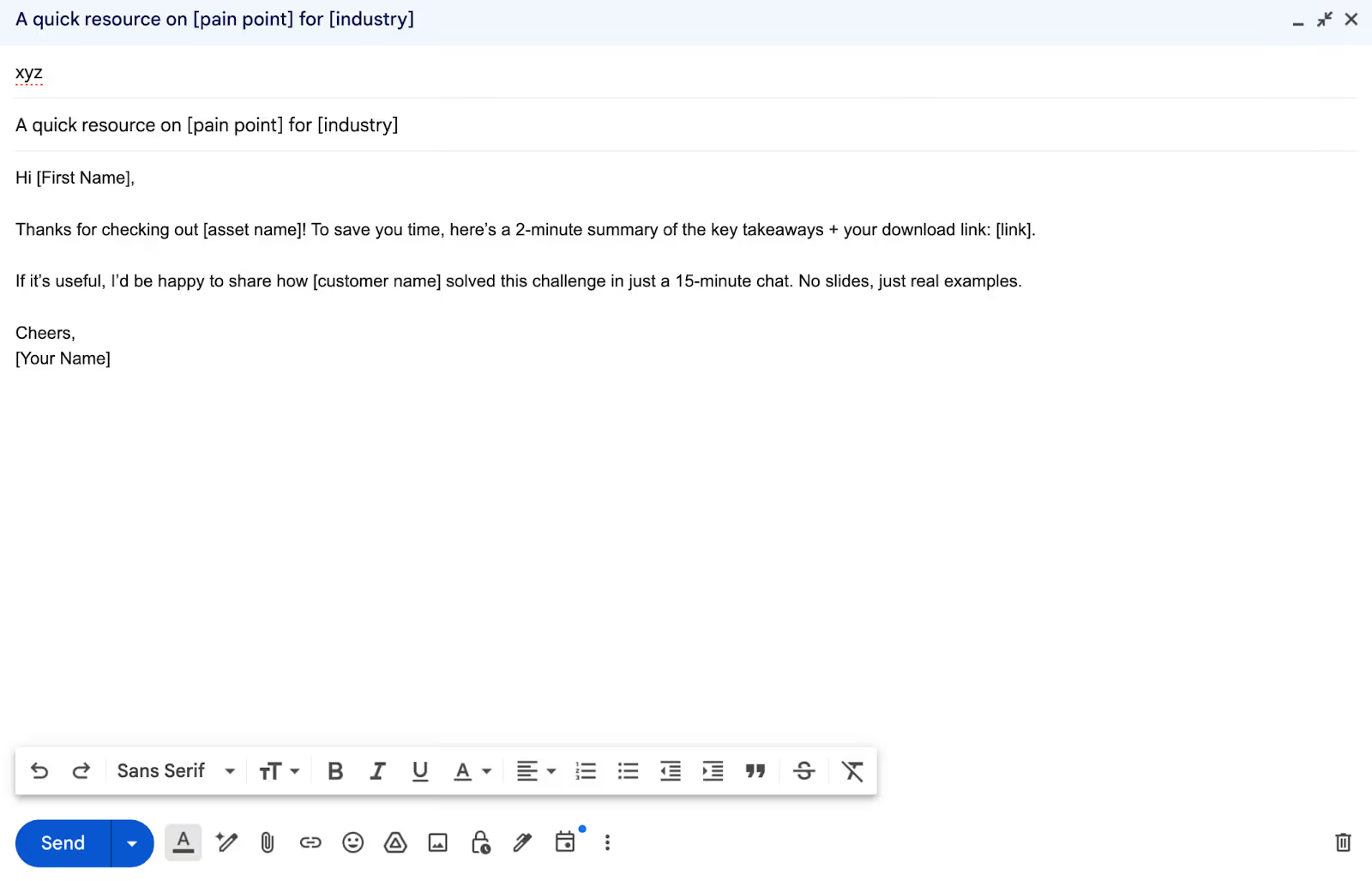
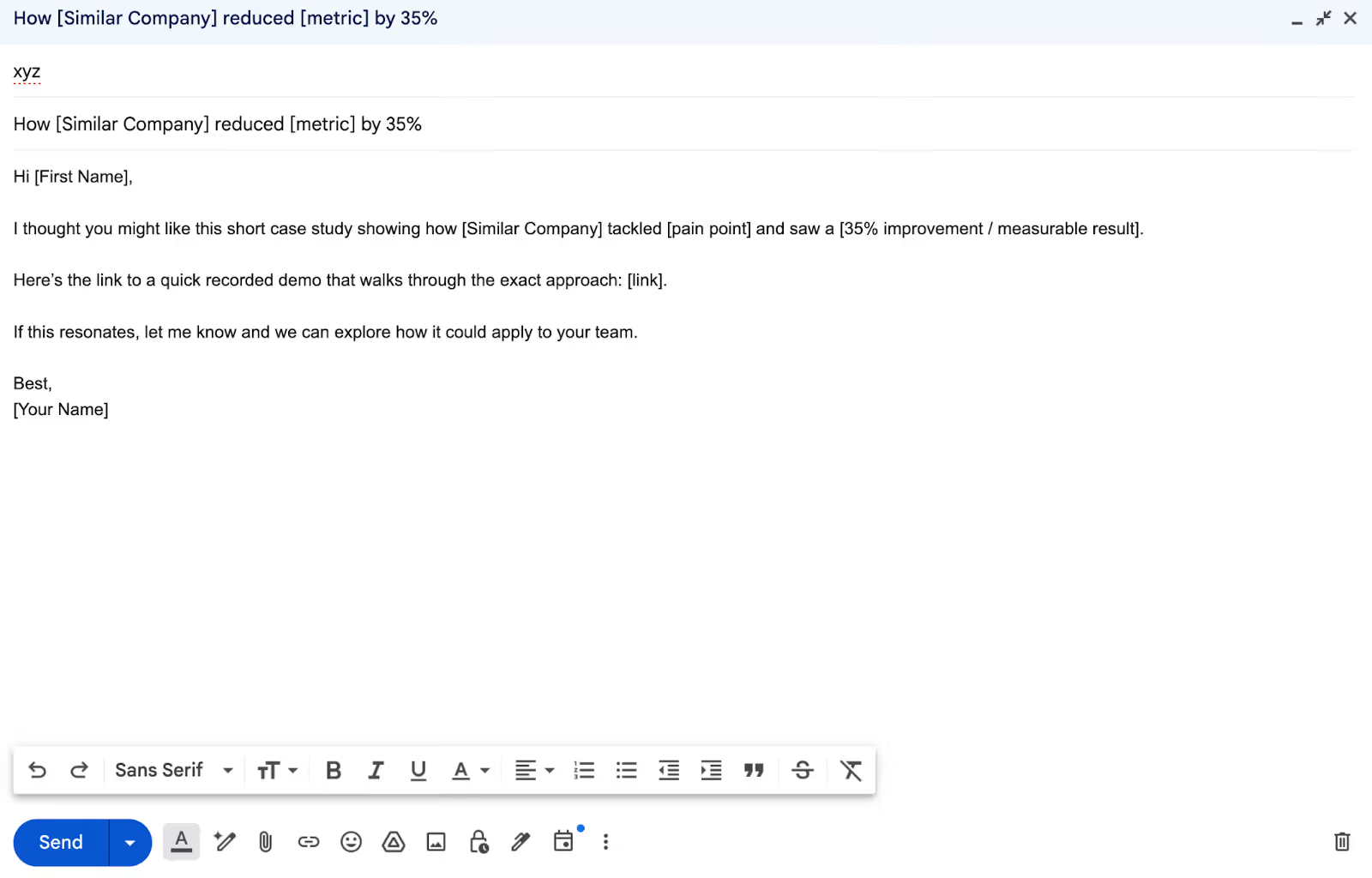
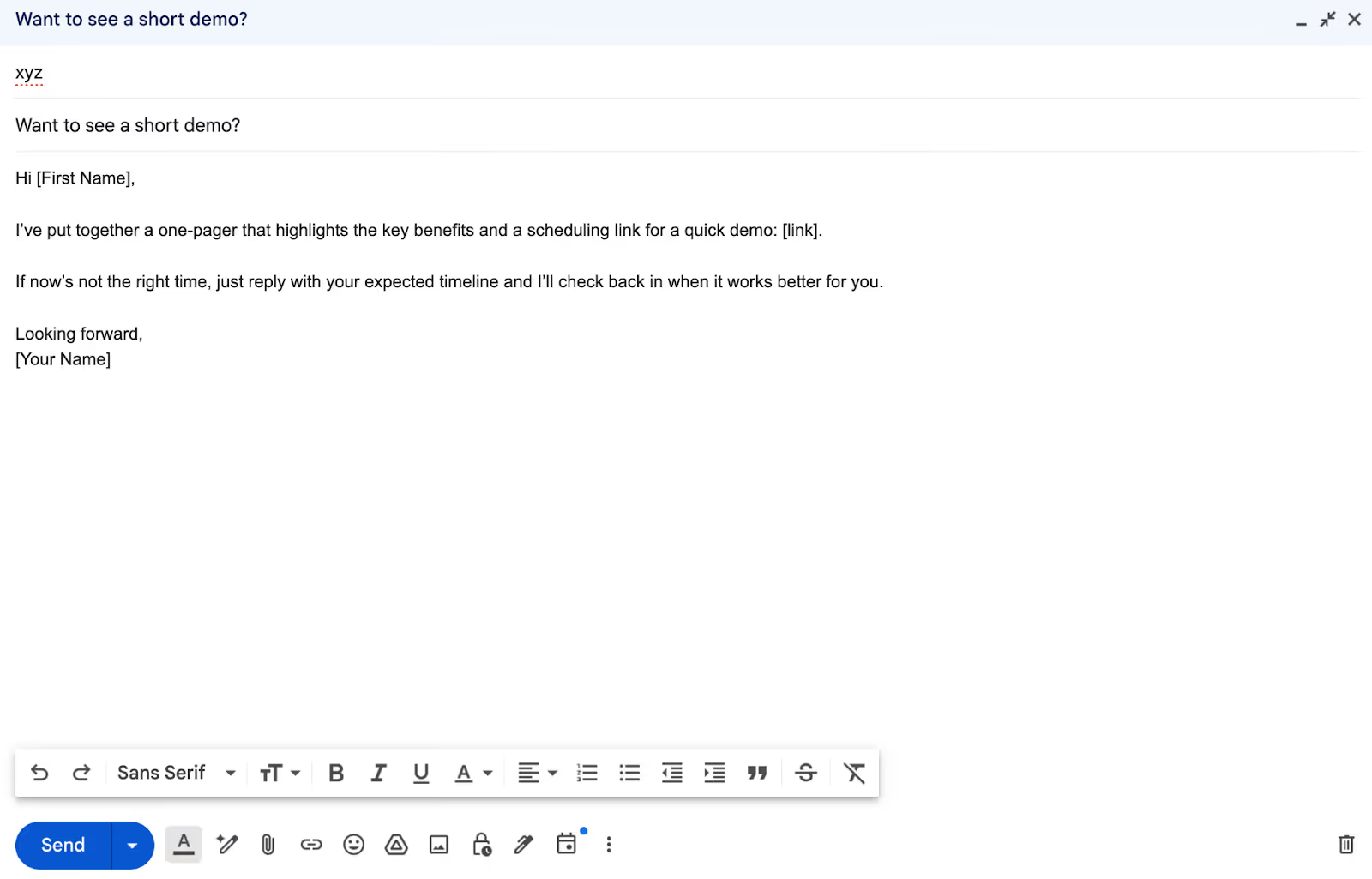
Here’s a simple 3-email sequence you can reuse.
Email 1: Day 0 (Welcome / Value)
Email 2: Day 3 (Case Study / Social Proof)
Email 3: Day 7 (Invite to Demo)
Conclusion
Lead nurturing is most effective when sales and marketing are aligned. Use data, automation, and timing to build trust and close faster.
Implement the techniques in this guide and see the results for yourself!




%201%20(1).svg)
.svg)
.svg)
.svg)
.svg)