
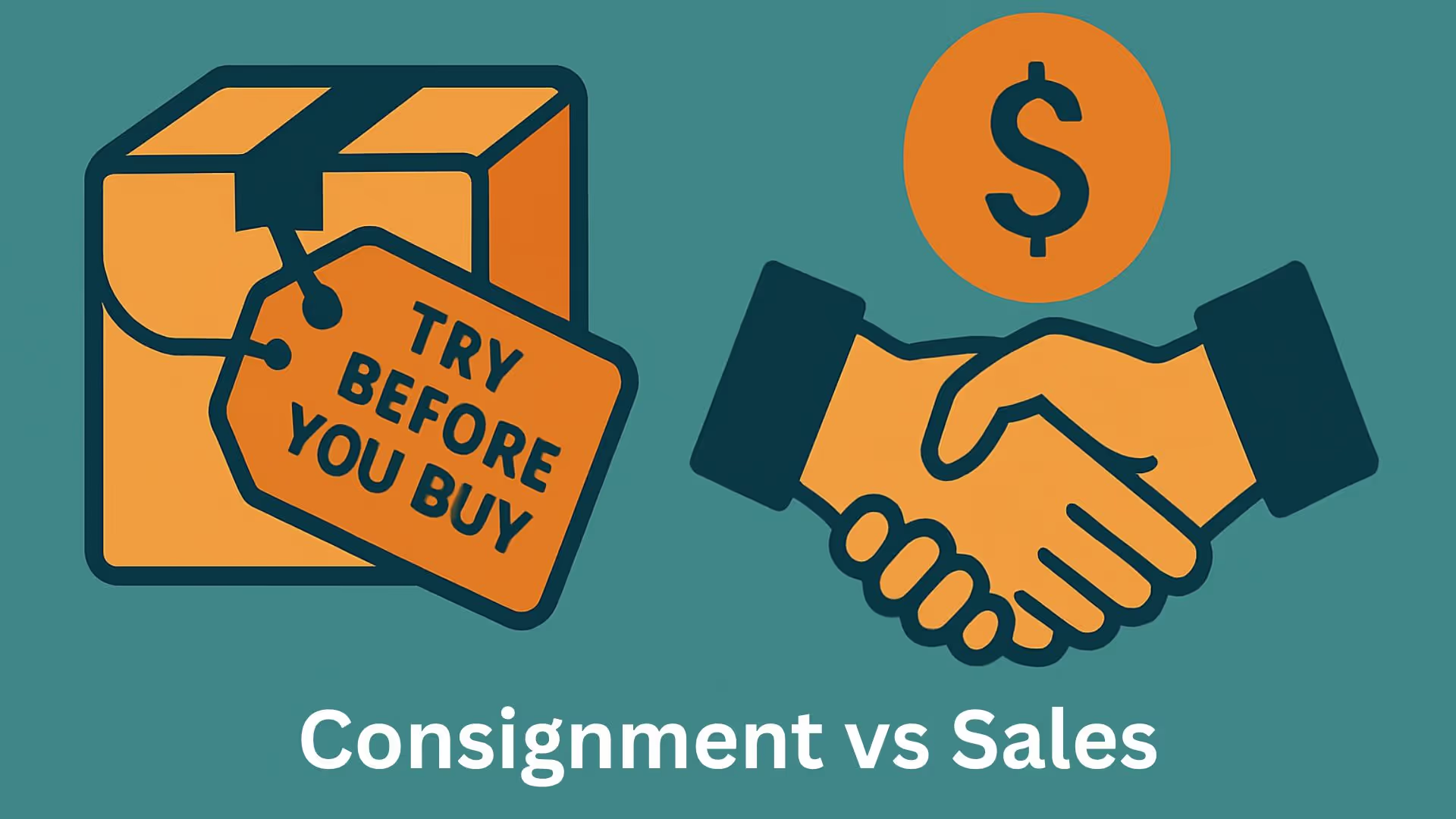


Though they sound similar, consignment and sale work very differently - especially when it comes to ownership, risk, and revenue. Sales is a direct relationship between a seller and buyer and consignment involves a middleman to make a sale.
Retail stores you visit for shopping like lifestyle, pantaloons and max are the most relatable examples of consignment sales where they stock up shelves with different brands on a consistent basis.
Brands like H&M, Zara are examples of a direct sale.
H&M: Sells directly through branded stores and online platforms.
Zara: Operates its own retail outlets and website, managing inventory, pricing, and branding end-to-end.
In this blog, we will distinguish between consignment and sale and how they impact business transactions. Let’s start!
What is a consignment?
A consignment refers to a business arrangement where the owner of the products, known as the consignor, delegates these products to middlemen, called consignees, to sell on their behalf.
Important: Ownership doesn’t transfer during consignment. Accountability for any kind of damage or loss during shipment to the consignee will be borne by the consignor.
Since the retailer or wholesaler knows the local market better, the consignor signs a contract with them to reach a wider audience and generate more revenue.
In case of unsold goods within the given time period, the consignee sends it back to the owner, and only items purchased by the consumers make the list of sales based on which the former receives a commission fee. An agreement regarding the consignment and revenue distribution upon sale is agreed and signed by both parties before partnership.
Even in a consignment, there are two kinds:
- Inward consignment: When the consignor ships his goods to a consignee within the country to be sold domestically.
- Outward consignment: When the consignor ships his goods to a consignee in another country for sale.
(1)_SobAVd8zXr_11zon_1_u01cS3L5.jpeg)
What is a sale?
A sale refers to the transaction in which a product is sold, resulting in the transfer of ownership from the seller to the buyer at the point of transaction. This process is fundamental in commerce and signifies the completion of the sales agreement between the two parties involved.
- Occurs at the point of transaction when payment is made.
- Involves an exchange of value, typically money for goods or services.
- Establishes the rights and responsibilities of both the seller and buyer.
The buyer pays the seller, takes on the inventory, and assumes all associated risks.
It is also important to remember that sold goods here cannot be returned.
What is dropshipping?
Dropshipping is a fulfillment model where the seller never holds inventory at all. When a customer places an order, the seller purchases the item from a third-party supplier who ships it directly to the customer. The seller at no point never touches the product.
Consignment vs sales vs dropshipping
Here’s how consignment and direct sale compare across key aspects.
Implication of consignment and sales in business transactions
Cash flow & working capital
Sale: A sale clears inventory and generates cash immediately to keep the production cycles running.
Consignment: Money is held in inventory and is considered a sale only when a consumer purchases it so your business will need a much stronger working capital to sustain day-to-day operations.
Revenue recognition & forecasting
Sale: Since exchange of cash is at the point of sale, forecasting becomes easier, which helps plan ahead and hit targets.
Consignment: Forecasting is less reliable because revenue depends on how fast your retailer/wholesaler sells stock. There are many factors that affect sales like season, customer demand, pricing.
Inventory risk & accountability
Sale: Once sold, the buyer bears any risk of damage, or if the product is outdated.
Consignment: Ownership still remains in the hands of the consignor which means that you carry the risk if it gets damaged, stolen, or sits unsold.
Sales targets & commissions
Sale: Deals count immediately toward quotas and commissions which is ideal for reps who thrive on instant wins.
Consignment: Your quota or target is achieved only when the consignee makes a sale, which can take time, so as a sales executive, you must learn how to manage longer cycles and may also need incentive plans that account for delayed payoff. Sales leaders may need to create different KPIs for consignment-based teams.
This is where consignment sales becomes harder to run than they look. A rep can't just log a deal and move on. They need to track what was shipped, what's actually sold through at each consignee location, and what's still sitting on a shelf somewhere, often across dozens of partner locations at once. Without a system that ties shipment records to sell-through data, sales leaders end up setting KPIs off incomplete information, and reps lose visibility into which of their "pending" deals are actually close to converting. A CRM that can track consignment inventory status alongside the deal record - not just "deal open/closed" but "shipped, 40% sold through, reorder likely" is what turns this into something manageable.
Partner & channel relationships
Sale: The process here is simple. The consignor sells to the buyer, ownership is transferred immediately.
Consignment: You’ll need to actively support your partner - check stock, run offers, help with promotions, and track sales performance.
Financial reporting & compliance
Sale: Inventory and cost of goods sold clear out of your balance sheet quickly, simplifying your P&L.
Consignment: Unsold stock remains an asset on your (consignor) books, which then demands separate reporting lines, reserve calculations for returns, and careful revenue-recognition policies to stay audit-compliant.
Legal and accounting implications
Sales: GST is applied when the invoice is raised and goods change hands.
Consignment: GST applies only after the consignee sells the goods. Incorrect invoicing or GST mismatch can lead to audit flags - especially in consignment models.
Keep signed consignment agreements, delivery notes, and proof of sale.
When should a business use each?
Consignment in practice: Many D2C skincare and fashion brands entering physical retail for the first time start with consignment specifically to de-risk the decision.
Sephora and similar multi-brand retailers have long used consignment or consignment-like terms for new or unproven brands, only shifting them to standard wholesale (direct sale) terms once sell-through data proves the brand moves inventory reliably. The consignment period effectively functions as a trial: the retailer takes on no inventory risk, and the brand gets shelf presence and real sales data it couldn't get otherwise. This is also why sell-through visibility matters so much during that period. It serves as evidence that determines whether the relationship graduates to a direct-sale arrangement.
Whether your business chooses consignment or sales depends on their marketing strategy, cash flow requirements and overall business goals. As sales executives, it is important you understand the differences of each model to adapt seamlessly. Brush up on specific industry insights and we will see you later with another blog.





%201%20(1).svg)
.svg)
.svg)
.svg)
.svg)