



B2B sales is complex - but McKinsey found that B2B players with strong analytics and disciplined execution can drive increases in earnings upwards of 15–25%.
This guide breaks down how B2B sales actually works, the funnel stages, and proven strategies high-performing teams use to win.
What is B2B Sales?
This type of sale is characterized by longer sales cycles, multiple decision-makers, and often more complex processes compared to B2C (Business-to-Consumer) sales.
Modern B2B sales today is driven by data, automation, AI-assisted prospecting, and multi-stakeholder deal management - not just cold calls. The focus is typically on building long-term relationships, demonstrating ROI, and addressing business needs with tailored solutions.
What are Some Examples of B2B Sales?
Industries where B2B sales dominates: Manufacturing automation, banking software, SaaS platforms, healthcare equipment, education tech, real estate services.
Manufacturing: Industrial Automation Solutions (like Siemens, ABB)

In manufacturing, B2B sales often start by getting a clear understanding of how each plant operates and what can be improved.
For example, imagine an automotive plant dealing with constant production delays because their machines keep breaking down. To solve the issue, an automation provider’s sales team comes in.
The sales team talks to the plant managers and digs into the specific challenges they’re facing. They learn that these machine issues are a huge drain on time and money. So, the sales team suggests adding IoT sensors to monitor equipment health and spot problems early, plus robotics to automate some of the repetitive tasks on the line.
To help the plant see the potential benefits, they set up a small pilot project. The plant managers see immediate improvements—less downtime and fewer repair costs. So, they decide to go all in and expand the solution across the plant.
In B2B sales, salespeople follow a hands-on, consultative sales approach that builds trust and leads to lasting partnerships.
BFSI Example: Banking Technology Providers (like Fiserv, FIS)

In the BFSI sector, B2B sales teams focus on helping financial institutions upgrade their tech to meet the needs of today’s digital world.
They start with the essentials, offering core systems to manage key functions like account handling, loan processing, and transactions.
As banks, insurers, and financial services shift online, these providers bring in secure digital platforms and payment solutions to keep everything running smoothly.
Sales teams also introduce critical security and compliance tools so institutions can stay compliant and protect customer data. They often recommend modern AI-powered CRM to automate follow-ups, track buyer intent, analyze calls, and forecast pipeline health - giving reps more time to sell.
The goal is simple: to help BFSI institutions modernize their systems and serve digital-first customers more effectively.
What is the B2B Sales Cycle?
The B2B sales cycle is a multi-stage process that businesses follow to convert prospects into paying customers.
This cycle encompasses all interactions from initial outreach to finalizing the sale and post-sale follow-up.
Step-by-step sales process
1. Prospecting and Lead Generation
Prospecting and lead generation set the stage for a successful B2B sales cycle. Here’s how to tackle this step effectively:
- Identifying Target Companies: Define your ideal segments using filters like industry, company size, location, and revenue. Understand their key challenges and identify the decision-makers involved in buying.
- Creating Ideal Customer Profiles (ICPs): Build your ICP based on the companies that benefit most from your solution. Consider factors like tech stack, budget, and growth stage, using your best existing customers as benchmarks.
- Outbound and Inbound Strategies:
- Outbound: Use personalized cold emails, LinkedIn outreach, and account-based marketing (ABM), supported by insights from company news or industry trends.
- Inbound: Attract qualified leads with SEO-optimized content such as blogs, webinars, and white papers that educate and position your brand as a trusted authority.
2. Lead Qualification
After identifying potential leads, the next crucial step is to determine which ones are worth pursuing. Here’s how to approach lead qualification in the B2B sales cycle:
- BANT Framework Implementation: Use the BANT framework (Budget, Authority, Need, Timeline) to assess whether a lead is ready for deeper engagement. This helps you quickly gauge if the prospect has the financial capacity, the decision-making power, a real need for your solution, and an appropriate timeline for implementation.
- Lead Scoring Methodologies: Implement lead scoring systems to prioritize leads based on their likelihood to convert. Assign scores to behaviors and attributes -like engagement with your content, company size, or role within the organization.
- Qualifying Decision-Makers: Ensure that your lead has the authority or influence in the buying process.
3. Initial contact and discovery
The initial contact sets the tone for the entire sales journey. Here's how to make it effective:
- Cold Calling & Email Strategies: Personalize your outreach. Highlight the prospect’s key pain points or recent achievements. Use attention-grabbing subject lines and keep messages concise, relevant, and value-driven.
- Discovery Call Best Practices: Build rapport quickly. Ask focused questions about their challenges and goals, and listen more than you speak. Gather enough insight to assess fit.
- Understanding Customer Pain Points: Understand not just the challenge, but why it matters to their business. This helps tailor your solution and positions you as a problem-solving partner.
4. Solution presentation
Presenting your solution effectively is crucial for moving a lead toward commitment. Here’s how to optimize this step:
- Customizing Proposals: Align proposals with the prospect’s pain points and goals. Use their language and industry context to show clear relevance.
- Product Demonstrations: Keep demos interactive and focused on solving key challenges. Use real scenarios and invite questions to stay engaging.
- ROI Calculations: Include clear, data-backed ROI. Highlight savings, efficiency, or revenue impact to justify the investment.
5. Handling objections
Effectively managing objections is vital for keeping the deal on track. Here’s how to navigate this stage:
- Common B2B Objections: Expect to hear concerns about budget constraints, competing priorities, the complexity of implementation, or skepticism about ROI. These are typical roadblocks that need thoughtful, strategic responses.
- Objection Handling Techniques: Address objections by listening actively and empathizing with the prospect’s concerns. Use techniques like the Feel-Felt-Found method to validate their perspective.
Imagine you’re selling a SaaS platform for project management to a mid-sized company. The prospect expresses concern about the potential disruption during implementation and training for their team:
Feel: “I understand that you’re concerned about the potential disruption to your team’s workflow during implementation. Many of our clients have shared the same concern when considering a change to a new system.”
Felt: “In fact, one of our clients in a similar industry, a marketing firm, felt the same hesitation about adopting new software and the possible impact on productivity.”
Found: “What they found, though, was that our platform’s intuitive design, combined with our comprehensive onboarding support, helped their team adapt within a few days. Not only did they avoid significant downtime, but they also saw a boost in collaboration and efficiency soon after implementation.”
Providing case studies, customer testimonials, or additional data can also reinforce confidence and overcome doubts.
- Building Consensus Among Stakeholders: In B2B sales, it’s essential to understand each stakeholder’s perspective and address their unique objections. Tailored presentations or workshops for different departments can help build alignment and ensure that everyone sees the solution’s value for their specific needs.
6. Negotiation and closing
Negotiation and closing are critical to turning an interested lead into a committed customer. Here’s how to manage this step effectively:
- Pricing Strategies: Offer flexible pricing (tiered, volume-based). Emphasize long-term value and ROI to keep discussions collaborative.
- Contract Terms: Create clear terms that suit both parties. Include options like flexible payments, SLAs, or pilot periods to speed up closure.
- Closing Techniques: Use approaches like the Assumptive or Summary Close. Address final objections directly and confidently to move the deal forward.
7. Post-Sale follow-up
The relationship doesn’t end once the deal is closed; effective post-sale follow-up is key to long-term success and customer retention. Here’s how to excel in this stage:
- Implementation Support: Provide onboarding, training, and hands-on support to help clients get started quickly.
- Account Management: Assign an account manager for regular check-ins, updates, and ongoing client advocacy.
- Customer Success Strategies: Track usage and satisfaction, gather feedback, and run periodic reviews to maximize value and identify growth opportunities.
What is a B2B Sales Funnel?
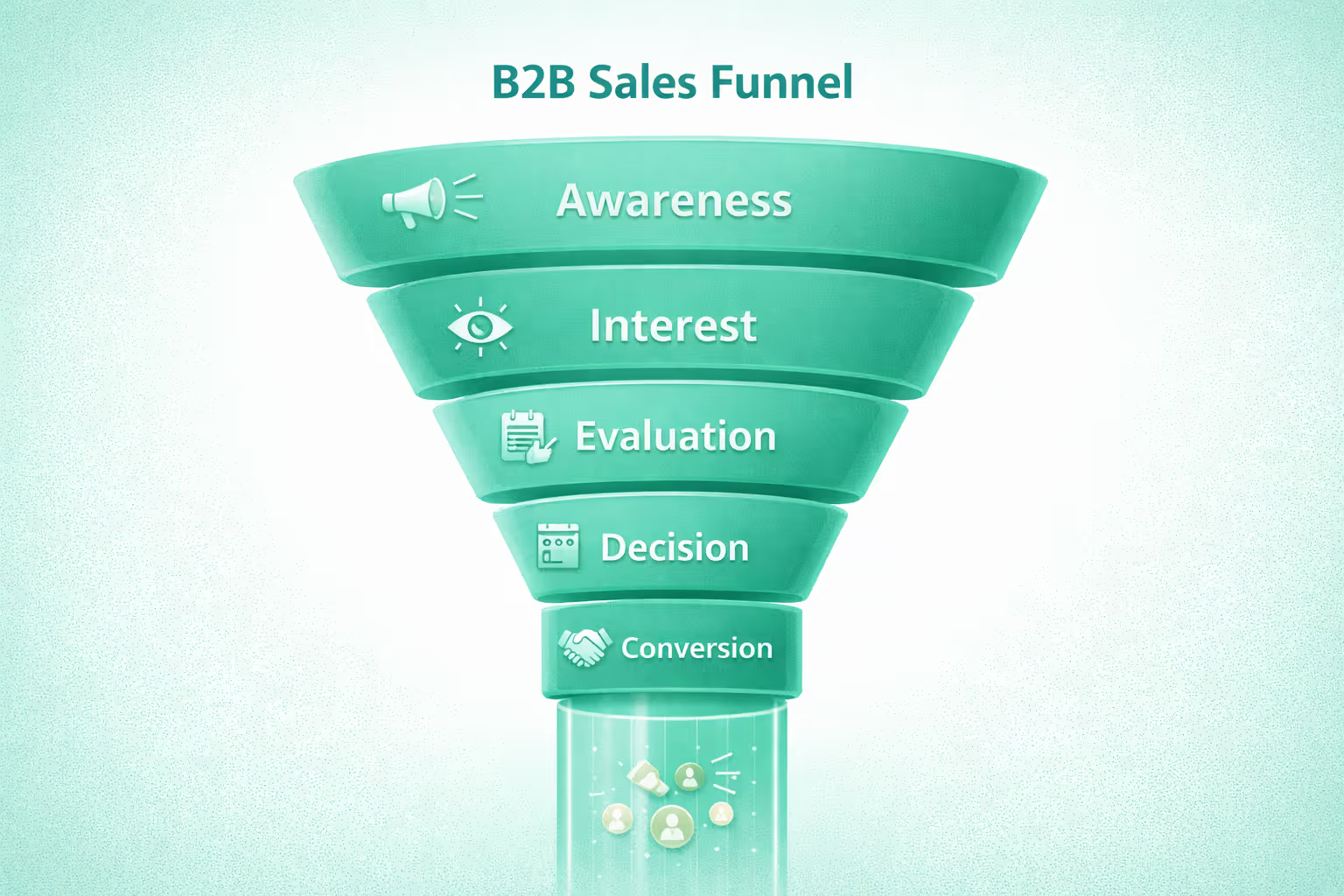
A B2B sales funnel represents the structured journey that prospective business clients take from initial contact to purchase.
How is B2B Sales Different from B2C Sales?
What are the challenges in B2B sales, and how can you overcome them?
1. Long and complex sales cycles
2. Multiple decision makers
3. High-stakes decisions
4. Price sensitivity and budget constraints
5. Competitive market landscape
6. Technical complexity
7. Changing buyer behaviour
8. Digital transformation challenges
Key B2B Sales KPIs
Close More Clients with These B2B Sales Techniques
Now that you know how B2B sales work and what different components are involved in it, you can create a clear strategy to target complex buyer groups. You can also use data-driven insights to engage prospects and move them efficiently through the sales cycle.
By applying these B2B sales tips and insights, you can connect more effectively with clients and ultimately close more deals. Use this knowledge to stay ahead in the evolving B2B landscape and drive consistent results.





%201%20(1).svg)
.svg)
.svg)
.svg)
.svg)