
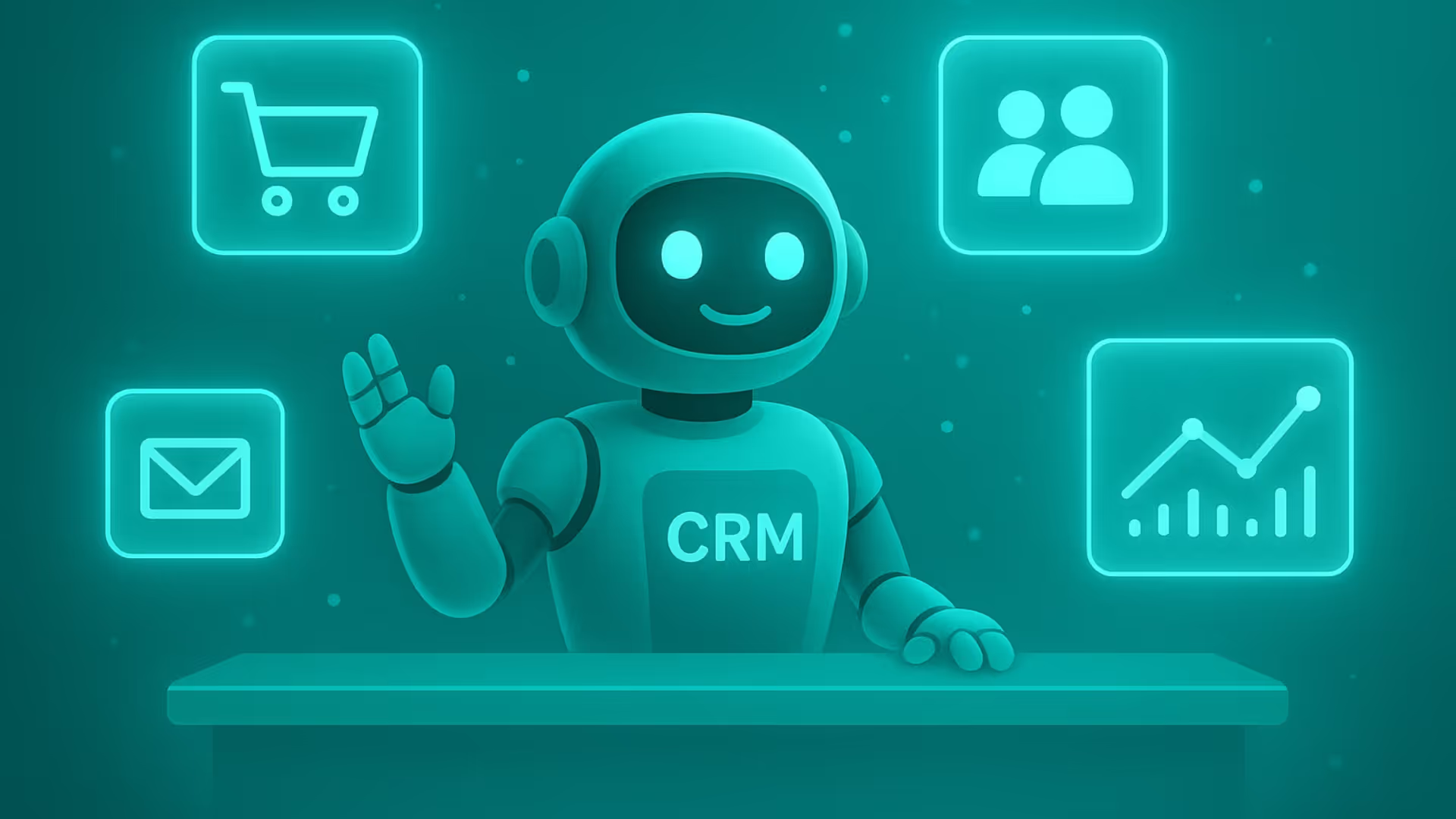


If you run an online store, you already know the challenge: customers browse, add to cart, disappear, compare prices, and only sometimes return. An ecommerce CRM helps you stay connected at every stage of this journey. It captures customer data, personalises communication, and automates follow-ups so you convert more shoppers into repeat buyers.
This blog explains key features of ecommerce CRM and how it works.
What is an ecommerce CRM?
Unlike a traditional sales CRM that primarily manages leads and sales opportunities, an ecommerce CRM focuses heavily on customer behavior, purchases, segmentation, personalization, retention, and repeat sales. It can also connect with ecommerce platforms such as Shopify and WooCommerce, marketing tools, customer service platforms, and other systems.
For example, an ecommerce business can use a CRM to identify customers who have purchased a particular product, segment them based on purchase history, send personalized recommendations, and automatically follow up after their purchase.
Why do ecommerce businesses need a CRM?
- Centralised customer data: All shopper info and activity in one place for better decision making.
- Personalised shopping experiences: Send relevant product suggestions, offers and messages.
- Higher repeat purchases and customer lifetime value: Nurture customers post purchase to turn them into loyal buyers.
- Better abandoned cart recovery: Automated reminders via email, SMS, or WhatsApp help recover lost sales.
- Automated engagement to boost sales: Welcome flows, upsell, and re-engagement campaigns run on autopilot.
- Less manual work: Automates routine marketing and support tasks, saving time and effort.
Key features of an ecommerce CRM
Ecommerce CRM vs Traditional CRM
How does an ecommerce CRM work
An ecommerce CRM guides customers through a structured journey from first website visit to a loyal repeat customer. Here’s a typical flow:
Visitor → Lead → First Purchase → Nurture → Repeat Customer → Loyal Advocate
1. Capture customer data
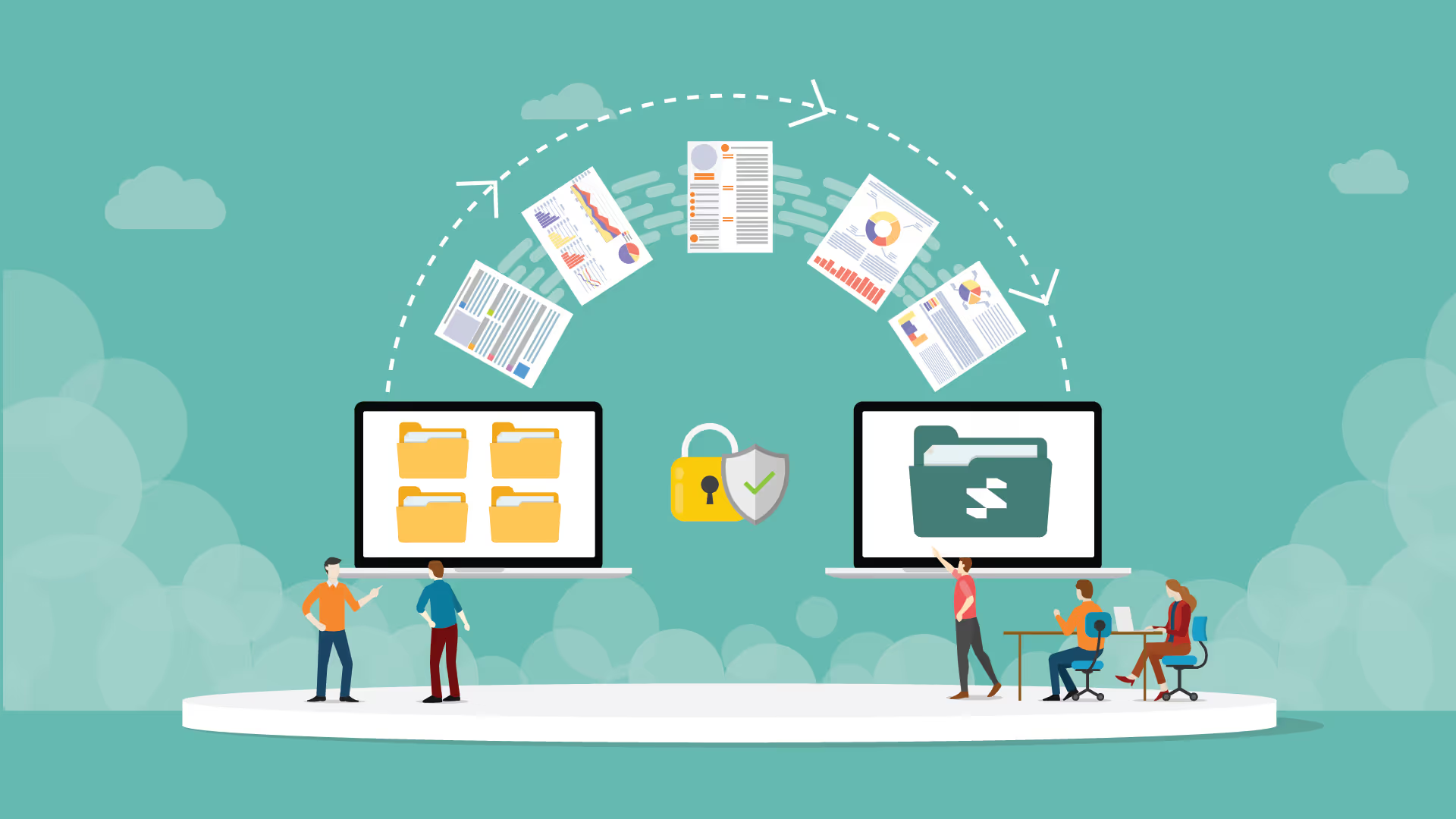
An ecommerce CRM collects customer information from different touchpoints, including website visits, account registrations, purchases, contact forms, email interactions, and customer service conversations. This data gives businesses a centralized view of how customers interact with the brand throughout their buying journey.
2. Create customer profiles
The CRM organizes the collected information into individual customer profiles. A profile can include details such as contact information, purchase history, preferences, communication history, and engagement activity. This allows businesses to understand each customer without having to gather information from multiple systems.
3. Track purchases and interactions
An ecommerce CRM records customer purchases and interactions over time. Businesses can track products purchased, order frequency, average order value, previous communications, website activity, and customer service interactions. This helps teams understand customer behavior and identify opportunities for follow-ups or repeat purchases.
4. Segment customers
Businesses can use CRM data to divide customers into different segments based on factors such as purchase history, location, interests, spending behavior, engagement, or customer value. For example, an ecommerce business could create separate segments for first-time buyers, repeat customers, high-value customers, and inactive customers.
5. Automate communication
Once customers are segmented, an ecommerce CRM can automate relevant communications based on customer actions or predefined conditions. For example, businesses can send welcome emails to new customers, abandoned-cart reminders, post-purchase messages, product updates, or re-engagement campaigns to inactive customers.
6. Personalize offers and recommendations
Customer data can be used to make communications, offers, and product recommendations more relevant. For example, a business can recommend complementary products based on a customer's previous purchases or offer a targeted promotion to customers who have not purchased recently. Personalization can help businesses improve engagement and encourage repeat purchases.
7. Measure customer behavior and revenue
Finally, ecommerce CRM analytics help businesses measure customer behavior and revenue across different segments and campaigns. Businesses can track metrics such as customer lifetime value, repeat purchase rate, average order value, retention rate, conversion rate, and revenue generated from campaigns. These insights help teams understand what is working and optimize their customer strategies.
Tips for implementation
- Identify ecommerce customer lifestyle
- Map necessary automations
- Set up segmentation and tagging
- Integrate store and channels
- Test flows before going live
{{callout-3}}
Conclusion
In today’s competitive landscape, an e-commerce CRM is no longer a luxury; it’s a necessity. By centralizing data and automating personalized journeys, it is the essential investment to turn anonymous visitors into loyal, repeat customers and drive sustained growth.
Challenges & Solutions
Data silos across platforms → solve via integrations
Over automation → personalise, don’t spam
Poor segmentation → use behaviour based tagging


.avif)
%201%20(1).svg)
.svg)
.svg)
.svg)
.svg)